


Disgard or Discard: which spelling is right? The correct word is discard. Disgard is a common mistake, and it isn’t a real word. Many people mix them up because they sound alike. You may have typed it wrong once too. Don’t worry, it happens to everyone. Even careful writers slip here.
The Disgard or Discard confusion is easy to fix. Discard means to throw away something you don’t need. Look for the word card inside it. Dis plus card. That small trick keeps your spelling right every time. In this guide, you’ll learn the meaning, the origin, and simple examples. You’ll also see how to avoid the Disgard or Discard mistake in emails, essays, and social posts. Each tip is short and easy to follow. It only takes a few minutes. Ready? Let’s clear it up together, step by step.
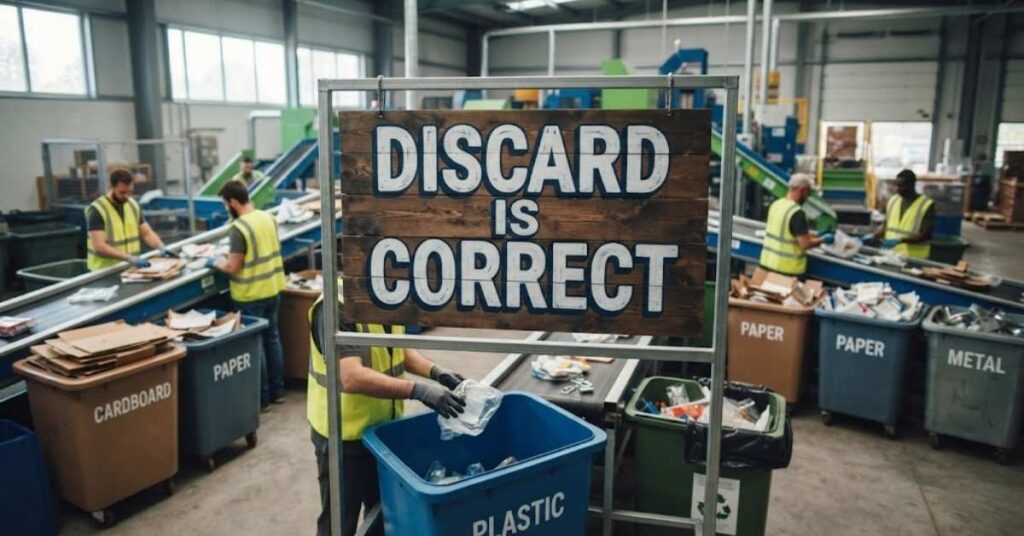
Discard is Correct ✅
What Does Discard Mean?
Discard is a verb that means to throw away or get rid of something you no longer need.
It also covers things you reject, like an idea that stopped fitting the plan.
That’s the standard discard definition in Merriam-Webster and other English dictionaries.
The discard meaning holds steady across every setting.
Simple Examples:
These discard in a sentence examples show the word at work:
• Please discard the empty boxes after unpacking.
• Maya discarded her old theory once the data disagreed.
• Always discard spoiled food right away.
Notice the pattern.
Every sentence has something that’s finished with.
Memory Trick:
Look for the card hiding inside the word.
Dis + card. To discard is to send a card away.
Once you spot the card, the g never sneaks in.
That’s the easiest way to lock in the discard spelling.
Why Do People Misspell It as “Disgard or Discard”? 🤔
Pronunciation Confusion
Say the word out loud and listen.
The s runs straight into the k sound, and in fast speech it can blur toward a g.
That’s why disgard feels right to the ear.
The pronunciation confusion is real, but the spelling still follows the card.
Influence of Other Words
Words like disregard, disgust, and disgrace all put a g right after dis.
Your brain spots the pattern and writes disgard out of habit.
Disregard is the biggest culprit.
It ends in gard, so the wrong ending feels familiar.
Autocorrect and Typing Errors
A rushed message on a phone is all it takes.
Once you type it wrong, autocorrect can learn the misspelling and stop flagging it.
Some tools never mark it as an error at all.
That’s how a typing error turns into a habit.
Read More: Cancell or Cancel? The Spelling Mistake You Keep Making 2026
Lack of Awareness
Many English learners hear the word long before they see it written.
So they guess the spelling from sound alone.
Native speakers do the same thing.
A common spelling mistake spreads because nobody corrects it.
The Solution
Slow down on this one word and picture a card.
Type discard, then run a quick spell check before you hit send.
Add it to your phone’s dictionary if autocorrect keeps fighting you.
Two seconds of effort beats a red face in a client email.
Discard Meaning and Origin 📜

Original Meaning (1500s)
The word first appeared in the 1500s, and it started in card games.
According to Etymonline, it meant throwing out a playing card from your hand.
Players needed a word for the card they didn’t want.
The term stuck.
Word Breakdown
Split it in two: dis- plus card.
The dis- prefix means away or apart.
So the literal sense is to send a card away.
The word origin also explains why that c belongs there.
Modern Usage
Today, discard covers far more than cards.
It applies to physical objects, digital files, and even ideas.
The card-game roots still show up in the discard pile.
Most people now use it for anything no longer needed.
Example in Different Contexts:
Here’s how the same word shifts across settings:
• Kitchen: Discard any food that’s been left out overnight.
• Office: We discarded the old template last quarter.
• Tech: Discard unsaved changes before closing the file.
• Mindset: Discard negative thoughts that hold you back.
Different rooms, same meaning.
That’s what makes the word so handy.
Discard vs Disregard: What is the Difference? 🔍
Key Difference:
Discard means throw away.
Disregard means ignore.
You discard a thing.
You disregard a warning, a rule, or a comment.
More Examples:
• She discarded the memo, then disregarded the advice inside it.
• Please disregard my last email, it went out by mistake.
• Discard the broken charger before it causes trouble.
• Don’t disregard the safety signs on the job site.
One word handles objects.
The other handles attention.
Memory Trick:
Disregard has regard in it, and regard means attention.
To disregard is to hold back your attention.
Discard has card in it.
One you toss, the other you ignore.
Discard vs Throw Away: Does the Difference Matter? 🗑️
Discard and throw away share the same core idea.
The gap is mostly tone.
Throw away sounds casual and physical.
Discard fits formal writing, professional writing, and abstract things like evidence.
You throw away a pizza box.
You discard weak evidence in a report.
How to Use Discard Correctly (With Examples) 📝
In Professional Emails 📧
Keep it clear and polite.
Example: Please discard the earlier draft and use the attached version.
Skip the hype.
A calm tone and correct spelling show you care about details.
In Academic Writing 📚
Researchers discard data points that miss set criteria.
Example: The team discarded weak evidence from three flawed studies.
Say why something was dropped.
Readers trust your method more that way.
In Everyday Conversation 🗣️
Casual talk keeps it short.
Example: I finally discarded those old receipts.
Friends might say toss or dump instead.
Both work fine here.
In Digital Contexts 💻
Apps use the word on buttons.
You’ll often see Discard changes when you close a file without saving.
Clicking it wipes unsaved changes.
Check twice, because many apps offer no undo.
In News Headlines 📰
Headlines love short, punchy verbs.
Example: City discards outdated plan after public pushback.
Editors expect standard English spelling.
A typo in a headline costs trust fast.
Social Media Posts 💬
Posts feel casual, but spelling still counts.
Example: Time to discard what no longer serves me. Monday reset.
A typo in a caption gets screenshotted.
Take the extra second to type it right.
Read More: Tuille or Tuile? The Spelling Trap Everyone Falls For 2026
Discard in Card Games and on Your Computer ��
In card games like rummy and Uno, the discard pile holds the cards players have tossed or played.
You draw from the deck, then discard one.
Software borrowed the idea.
Hit discard in a code editor or a document and you drop unsaved changes for good.
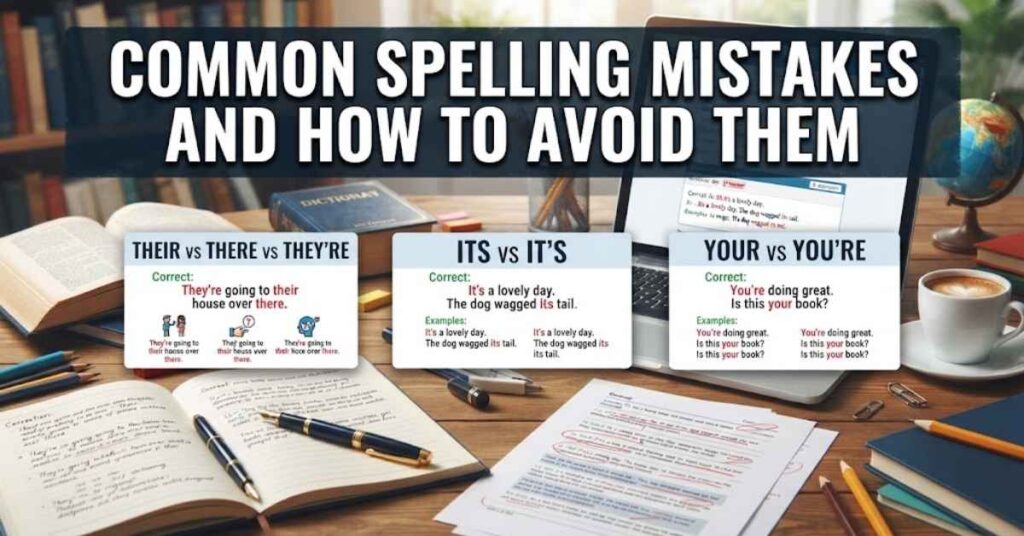
Common Spelling Mistakes and How to Avoid Them ❌
Mistake #1: “Disgard”
This incorrect spelling is the big one.
The g replaces the c and changes nothing about the sound.
The fix is simple.
Spot the card inside the word. No card, no discard.
Mistake #2: “Discart”
Here the ending flips to cart.
That word means a wagon or a shopping trolley.
You’d throw away a card, not a cart.
Keep the d at the end.
Mistake #3: “Discared”
Writers sometimes slip an extra e into the middle.
The correct past tense is discarded, which is discard plus ed.
Same rule for discarding: discard plus ing.
No stray letters needed.
Mistake #4: Using “discard” as an adjective
Discard works as a verb and a noun.
For the adjective form, you want discarded.
Wrong: the discard toys. Right: the discarded toys.
The exception is discard pile, where the word works as a noun describing the pile.
Correction Table
| Wrong | Correct | Why |
| disgard | discard | It contains the word card |
| disgarded | discarded | Same g mistake, plus ed |
| discart | discard | Cart is a different word |
| discared | discarded | Past tense adds ed |
| the discard toys | the discarded toys | The adjective form is discarded |
Discard Synonyms and Alternative Words 📖
Common Synonyms:
These discard synonyms cover most situations:
• Throw away: everyday, physical stuff
• Get rid of: casual and flexible
• Dispose of: formal, often for waste
• Remove and eliminate: neutral and direct
• Dump and toss: relaxed and quick
• Scrap and jettison: plans, cargo, or weight
• Abandon: leaving something behind for good
Each one carries a slightly different mood.
Pick the one that fits your reader.
Example Sentences with Synonyms:
• We scrapped the old plan.
• The crew jettisoned extra cargo to stay light.
• Please dispose of batteries at a recycling point.
• He tossed the flyer without reading it.
Read More: Faring or Fairing: Are You Using the Wrong Word in 2026
Choosing the Right Word:
Match the word to the mood.
Toss and dump feel casual, while dispose of and eliminate feel formal.
When in doubt, discard works almost everywhere.
It’s the safe middle ground.
Why Spelling Discard Right Matters in Real Life 💼
Picture a job applicant who writes, “I disgard outdated methods and focus on what works.”
The hiring manager reads that line and pauses on the spelling.
One typo rarely sinks an application.
Still, small slips can make a sharp idea look rushed, and readers notice.
The same goes for blogs, school essays, and product pages.
Search engines and readers both reward clean, correct usage, so a quick check pays off.
Quick Checklist to Never Misspell Discard Again ✅
Run through these five steps whenever the word shows up:
1. Find the card inside the word.
2. Say dis-KARD slowly once.
3. Switch to disregard only when you mean ignore.
4. Use discarded for the past tense and the adjective.
5. Run a spell check before you send.
It takes ten seconds.
After a week, you won’t need the list.
Frequently Asked Questions ❓
Q1: Is “disgard” a word?
No. It’s a common misspelling, and no standard dictionary lists it.
The right word is discard.
Q2: What does discard mean?
It means to throw away or get rid of something that’s no longer needed.
It also covers rejecting ideas.
Q3: Is it discard or disgard?
It’s discard, always.
The word contains card.
Q4: What is the difference between discard and disregard?
Discard means throw away.
Disregard means ignore or pay no attention.
Q5: Can discard be used as a noun?
Yes. In card games, a discard is the card you throw out.
Example: She picked up the discard.
Q6: What is the adjective form of discard?
It’s discarded.
Example: discarded packaging.
Q7: How do you pronounce discard?
The verb is dis-KARD, with stress on the second syllable.
The noun often shifts the stress to the front: DIS-kard.
Q8: What is a simple memory trick for discard?
Spot the card inside dis-card.
No card, no discard.
Q9: Is discard formal or informal?
It’s neutral, so it fits formal and casual writing.
For a looser vibe, swap in toss.
Q10: Can I use discard for ideas and emotions?
Yes.
You can discard ideas, plans, or negative thoughts when you mean setting them aside for good.
Conclusion 🎯
So, Disgard or Discard? The answer is simple. In the Disgard or Discard debate, discard wins. Disgard is just a typo that many people repeat. Now you know why the mix-up happens. The word sounds a bit like it has a g. Your brain fills in the gap. Look for the word card inside discard. If you see the card, you spell it right. That’s all it takes.
Next time you wonder about Disgard or Discard, picture a deck of cards. That one image clears the doubt. Use discard for things you throw away. Use disregard when you mean ignore. Keep these two apart, and your writing stays clean. The Disgard or Discard question won’t slow you down again. Did this trick help you? Drop a comment below. Share this guide with a friend who writes a lot.

Wang Fang is a language and grammar writer who enjoys making English easier to understand. She creates clear, practical content about grammar rules, vocabulary, word usage, sentence structure, and writing tips. Her goal is to help students, writers, and everyday learners improve their English with simple explanations and useful examples.